Quick answer: CPT 97813 is the starting code for acupuncture with electrical stimulation. The descriptor reads "Acupuncture, 1 or more needles, with electrical stimulation, initial 15 minutes of personal one-on-one contact with the patient"1. A claim carries it once per date of service12. Each further 15 minutes, with needles re-inserted, is add-on code 978141.
This page explains what the code means, how its 15 minutes are counted, and which codes can and cannot sit beside it. It also covers Medicare's rules and what a chart needs to show.
What does CPT 97813 mean?
CPT 97813 means acupuncture with one or more needles and electrical stimulation, reported for the first 15 minutes you spend one-on-one with the patient1.
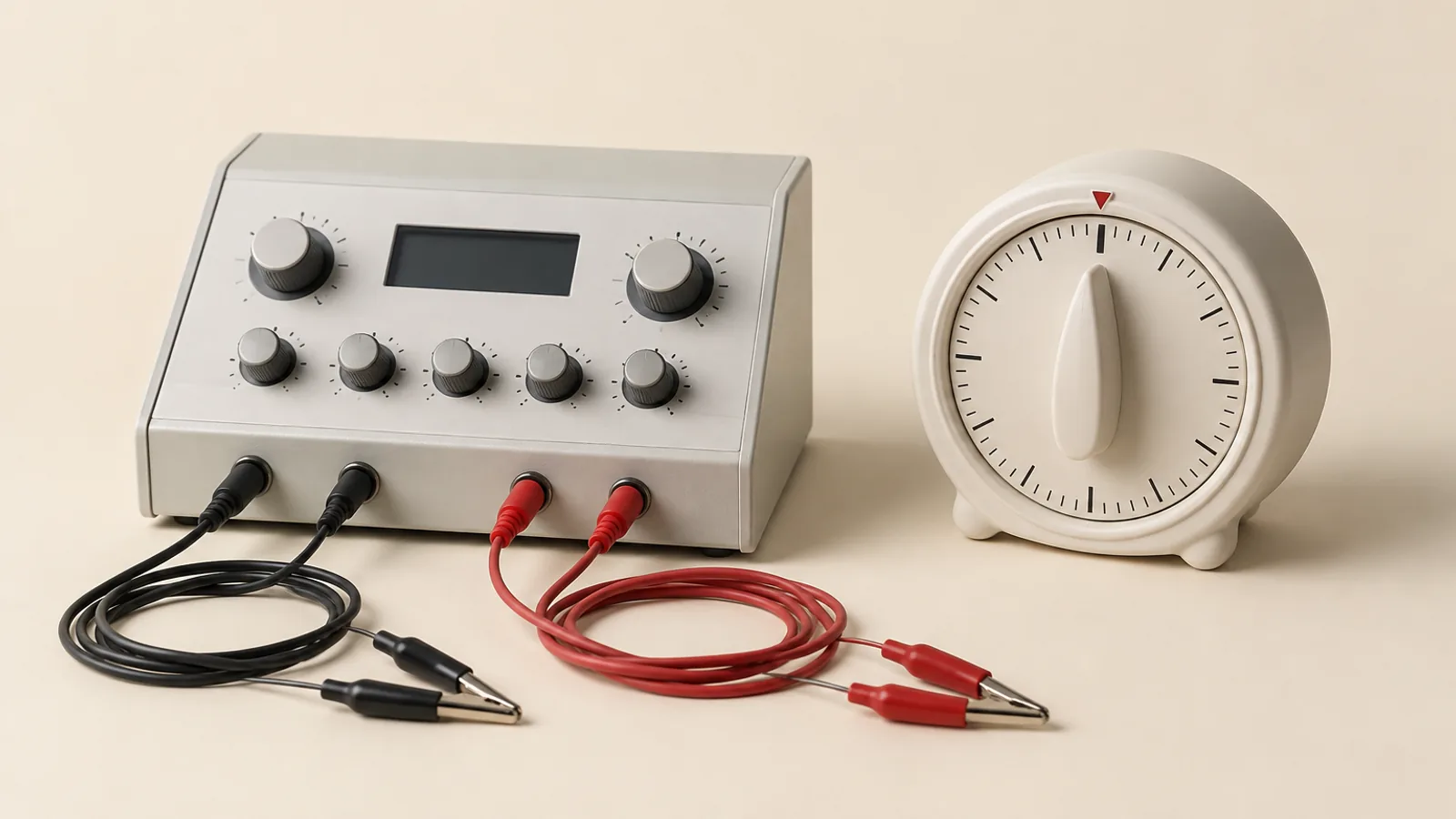
Cigna's coverage policy uses the word electroacupuncture for needles that are stimulated electrically instead of by hand3. That is the service 97813 reports.
"Initial" matters. 97813 opens the visit, so it appears once on a date of service12. When the first 15 minutes are done without electrical stimulation, the opening code is 97810 instead12.
How are the 15 minutes of 97813 counted?
The 15 minutes of 97813 are contact time: the minutes you are personally with the patient1.
UHC's Commercial and Individual Exchange policy puts it in practical terms. Units follow face-to-face time, and how long the needles stay in does not matter2. Minutes you spend away from the patient are left out of the count2.
Here is one visit with minutes. From 2:00 to 2:15 you are with the patient, placing needles and starting electrical stimulation. That is 97813, 1 unit1.
From 2:15 to 2:35 the patient rests with the current on while you are in another room. Those 20 minutes are time away from the patient, so they add no units2. From 2:35 to 2:50 you are back, re-inserting needles with electrical stimulation and staying with the patient. That is 97814, 1 unit1.
The patient was in the room for 50 minutes. The claim counts 30 of them, as 2 units. For a block shorter than 15 minutes, check the payer's own policy.
Which add-on codes go with 97813?
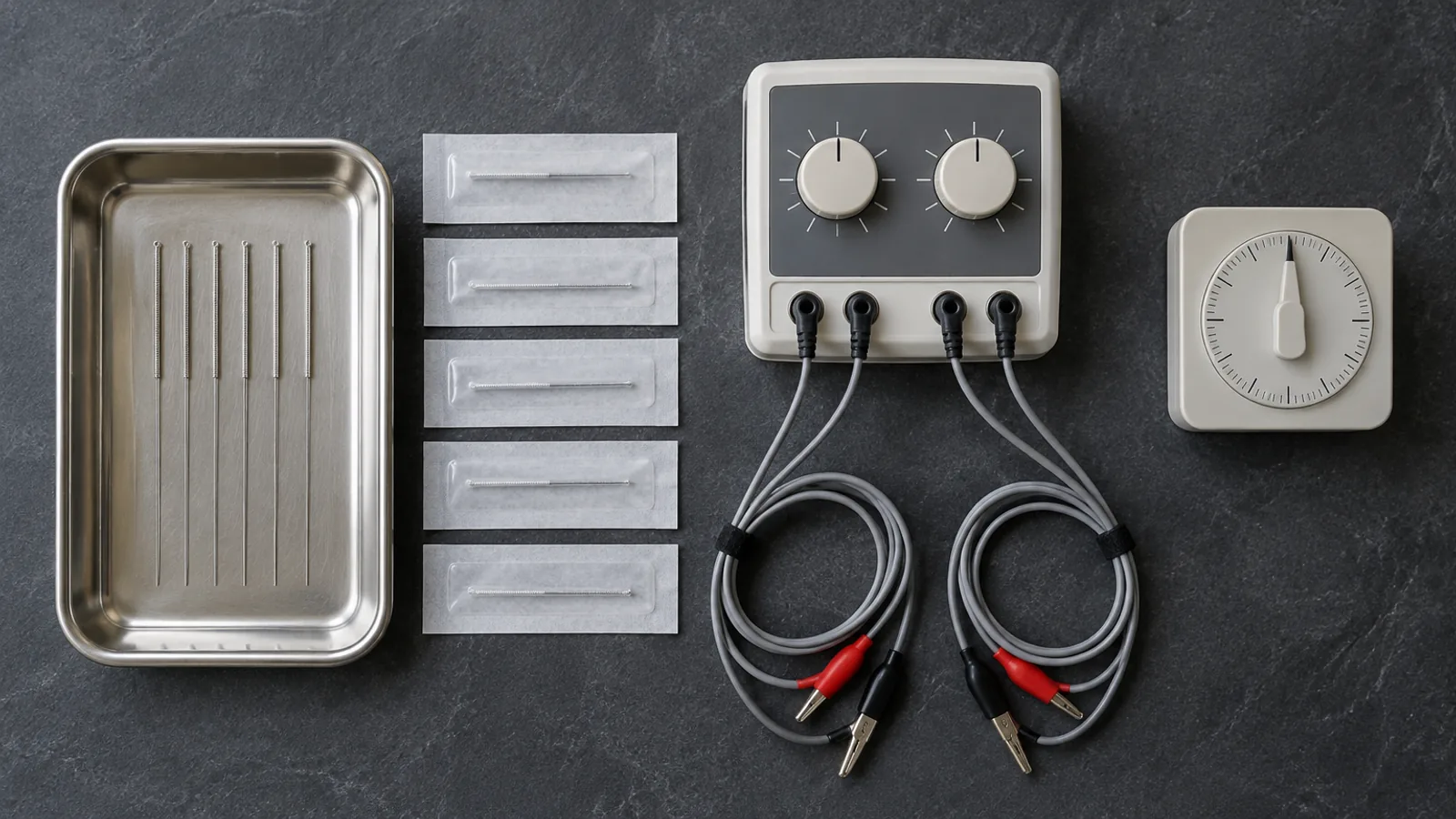
97814 is the matching add-on for 97813. It reports each additional 15 minutes of one-on-one contact with electrical stimulation, and every unit needs a re-insertion of needles1. An add-on code sits on top of an initial code, never alone14.
Medicare does not lock 97813 to 97814. Its claims manual lets either initial code sit with either add-on, 97811 or 97814, and counts the whole date as one session1.
Payers cap the units. UHC allows 1 unit of 97813 and 2 units of 97814 per date of service2. At Premera Blue Cross, a day's claim tops out at one initial code and one add-on code, the add-on at 2 units4. That makes a ceiling of 45 minutes of one-on-one contact on a date4.
Can you report 97813 and 97810 on the same day?
No. A Medicare claim has room for one initial acupuncture code per date of service, 97810 or 978131. UHC and Premera apply the same limit24.
UHC's policy takes up the mixed visit. Say treatment starts without electrical stimulation, and later a new needle goes in so the visit can finish with it2. UHC's answer splits that visit: the opening 15 minutes go to 97810, and the face-to-face time after that goes to 978142. 97813 stays off the claim that day2.
So electrical stimulation at some point in a visit does not by itself make 97813 the initial code. In UHC's example, what happened in the first 15 minutes decides it2.
Can you bill a separate electrical stimulation code with 97813?
Not for the same service. UHC's policy says 97014 and 97032 should not be reported in addition to 97813 or 97814, because it treats them as mutually exclusive. A modifier may be appropriate when the electrical stimulation is done separately from the acupuncture and the documentation supports that2. The same policy treats 97813 and 97814 as bundled with G0283, Medicare's code for unattended electrical stimulation25.
There is one opening. Stimulation that is a distinct service, unrelated to the acupuncture and documented that way, can qualify for a modifier under UHC's policy2. Its example is stimulation on a different body part from the acupuncture2.
Needles do not get their own line either. UHC and Premera both count the needles as part of the acupuncture service24.
Can you report an office visit with 97813?
Sometimes. UHC and Premera both look for a significant, separately identifiable evaluation and management (E/M) service that goes beyond the usual work before and after needling24.
Premera wants modifier 25 on the E/M line. It adds that the modifier alone does not guarantee payment, because the documentation has to show a separate service4.
Both payers keep two clocks: the acupuncture units cannot borrow minutes from the E/M service24. UHC also counts the assessment around the needling, the treatment discussion, the note and home instructions as work already inside the initial code2.
When does Medicare cover 97813?
Chronic low back pain is the only condition for which Medicare pays 97813 or any other acupuncture code16. Medicare's definition leaves out a lot. The pain must have lasted at least 12 weeks, and it cannot trace to an identifiable systemic cause, to surgery or to pregnancy6.
The benefit runs to 12 visits in 90 days, plus 8 more sessions for a patient who is improving, and it stops at 20 treatments a year6. Lack of progress ends the benefit sooner: once a patient is no longer improving, or is getting worse, the rule is that treatment stops6.
97813 counts the same as 97810 here. One initial code, with or without add-ons, is one session toward the 201.
The KX modifier starts at session 13 and stays on through session 20. A claim in that range without it comes back as unprocessable1. Nothing before session 13 calls for it7. KX tells Medicare that the added sessions are medically necessary and that the record backs this up7.
The coverage rule also limits who may furnish acupuncture. Its list starts with physicians, who follow their state's requirements6. The rest of the list is physician assistants, nurse practitioners, clinical nurse specialists and auxiliary personnel6.
Three conditions apply to that second group: state requirements, a master's or doctoral degree in acupuncture or Oriental Medicine from an ACAOM-accredited school, and an acupuncture license that is current, full, active and unrestricted6. Supervision by a physician, physician assistant, nurse practitioner or clinical nurse specialist is a further condition for auxiliary personnel6.
What should the chart show for 97813?
A chart for 97813 should show three facts: electrical stimulation was used, how many minutes were face to face, and, for each unit of 97814, that needles were re-inserted1.
Cigna's coverage policy sets a minimum for every treatment note. Among its items are the date, the total treatment time, the patient's response, and a description of treatment that matches the codes billed3. Cigna asks for total time and UHC counts face-to-face time, so a note that shows both speaks to each23.
In Dx-Chart, CPT codes are filled in by app logic from the visit type and the treatments you select, not by AI. The acupuncture codes follow the method you select: 97813 and 97814 for electroacupuncture, 97810 and 97811 for standard acupuncture. Each CPT line on a chart carries its own duration and amount.
Your clinic keeps one fee schedule in its settings, with a standard rate per code. Dx-Chart does not submit insurance claims.
For all four codes on one page, print the acupuncture CPT codes reference. For the diagnosis side, see the ICD-10 codes guide. And when a payer asks you to show progress, the medical necessity report guide walks through that report field by field.
One step before your next electroacupuncture claim: open that payer's acupuncture policy and find its unit limit for 97814 and its rule on separate electrical stimulation codes. If you want the codes set for you as you chart, Start charting.
CPT codes and descriptions are copyright 2025 American Medical Association5.
Sources
Footnotes
-
CMS: Change Request 13288, National Coverage Determination 30.3.3 acupuncture codes. ↩ ↩2 ↩3 ↩4 ↩5 ↩6 ↩7 ↩8 ↩9 ↩10 ↩11 ↩12 ↩13 ↩14 ↩15 ↩16 ↩17 ↩18 ↩19 ↩20
-
UnitedHealthcare: Acupuncture Policy, Commercial and Individual Exchange. ↩ ↩2 ↩3 ↩4 ↩5 ↩6 ↩7 ↩8 ↩9 ↩10 ↩11 ↩12 ↩13 ↩14 ↩15 ↩16 ↩17 ↩18 ↩19 ↩20 ↩21 ↩22 ↩23 ↩24
-
Cigna: Medical Coverage Policy, Acupuncture (CPG 024). ↩ ↩2 ↩3
-
Premera Blue Cross: Payment Policy CP.PP.020, Acupuncture. ↩ ↩2 ↩3 ↩4 ↩5 ↩6 ↩7 ↩8 ↩9
-
CMS: National Coverage Determination 30.3.3, Acupuncture for Chronic Lower Back Pain. ↩ ↩2 ↩3 ↩4 ↩5 ↩6 ↩7 ↩8
-
CMS: Change Request 11755, National Coverage Determination 30.3.3 Acupuncture for Chronic Low Back Pain. ↩ ↩2